Campfire Building and Safety: How to Build, Cook Over, and Safely Extinguish a Fire
The campfire is the social and experiential center of camping — the source of warmth, cooking capability, and the specific quality of gathered attention that fire uniquely produces in groups. It is also a significant source of preventable injury and property damage when built or managed incorrectly. Understanding the correct technique for building a fire, the safety practices that prevent accidents, and the proper extinguishment method that actually puts fires out rather than merely suppressing them, makes every campfire safer and more enjoyable.
Check Fire Restrictions Before You Arrive
Fire restrictions — periods of prohibited or restricted campfire use during high-risk drought and wind conditions — are common in western US states and increasingly in other regions during summer and fall. Violations of fire restriction orders carry significant fines and can result in prosecution for resulting fire damage. Check current fire restrictions through the USDA Forest Service website, InciWeb, or state fire agency websites for your destination before departure. Many campgrounds post current fire restriction status at the campground entrance, but conditions can change daily and the information at the entrance may not reflect same-day changes.
Building a Safe and Effective Fire
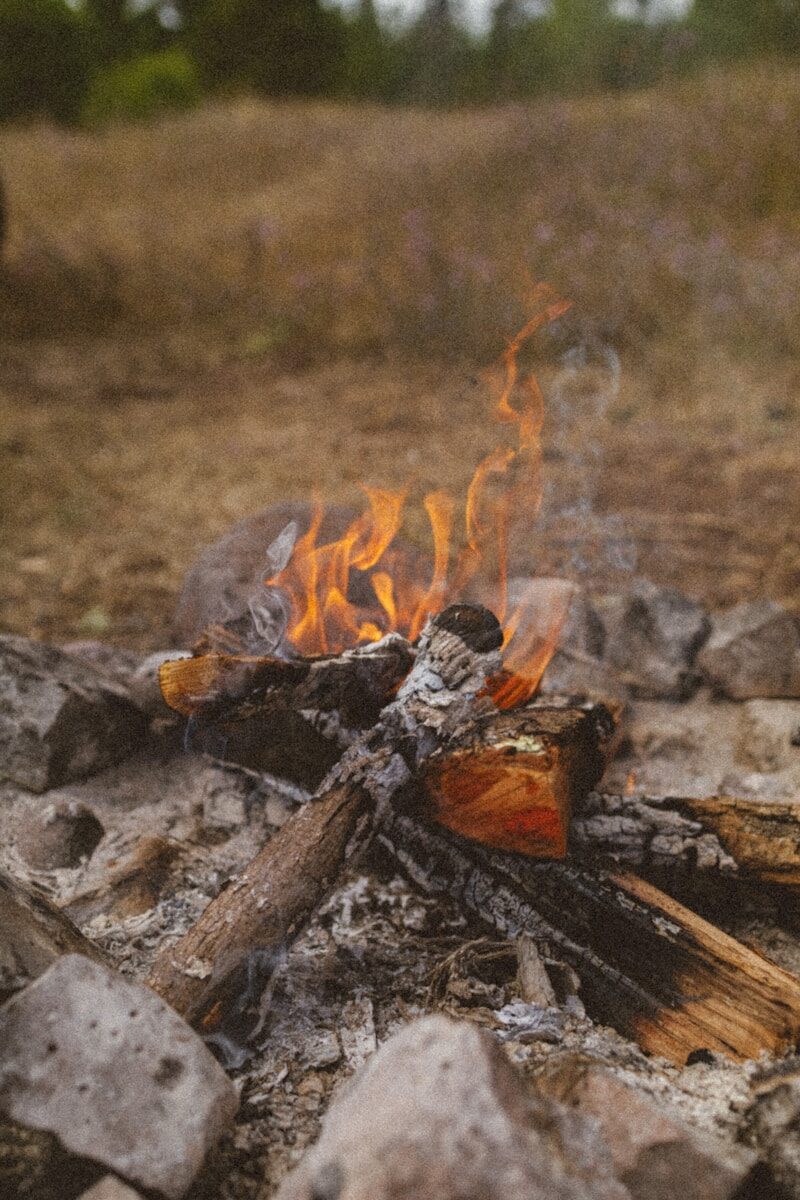
Use established fire rings or fire pits only — never build fires on bare ground in established campgrounds. Gather three sizes of fuel: tinder (dry leaves, paper, commercial fire starters), kindling (small sticks under 1 inch in diameter), and fuel wood (logs 2 to 4 inches in diameter for sustained burns). The log cabin or teepee structure — tinder in the center, kindling arranged around it, fuel logs stacked outside — allows airflow through the fire while providing the fuel progression from fine tinder to substantial logs that sustains a fire without constant attention.
Complete Extinguishment
Drown the fire with water — not dirt or sand, which can insulate coals and allow them to reignite. Pour water on the fire and stir the coals with a stick to expose every ember to the water. Continue until no smoke or steam rises and you can place your hand close to the coals without feeling heat. The “cold to the touch” standard — not “no visible flames” — is the correct extinguishment verification. A campfire that has been covered with dirt but not wetted and stirred can reignite from windblown embers hours later.