RV Solar Power: How to Set Up Solar Panels and a Battery Bank
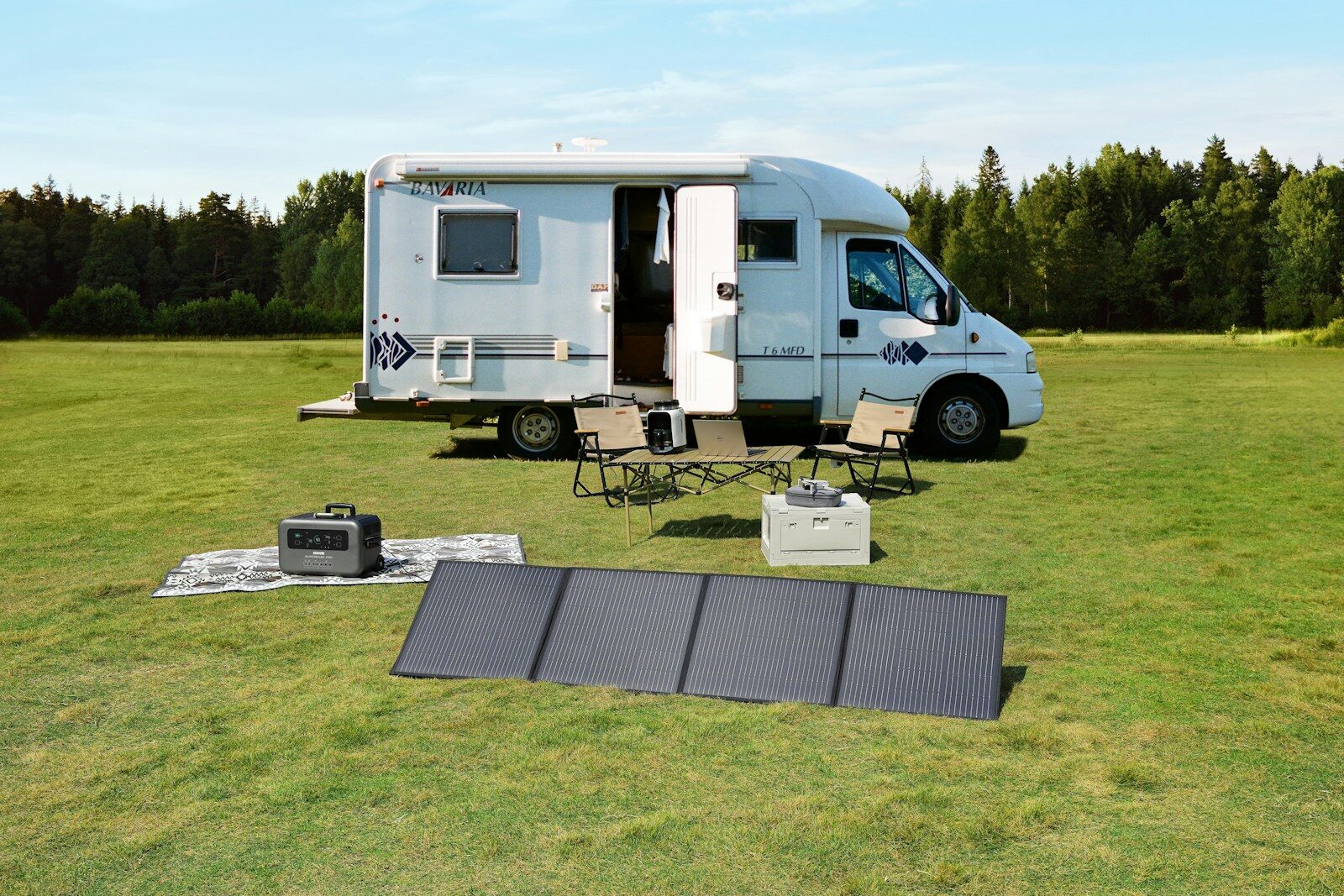
An RV solar power system — rooftop solar panels connected to a battery bank that stores the power for use through the night and during cloudy periods — is the single upgrade that most expands an RV’s camping capability. With an adequate solar and battery system, the RV becomes independent of electrical hookups for three to five days or indefinitely in good sun conditions, opening the free camping on public land that resort campground-dependent RVers cannot access. The system also eliminates the generator noise that is the most common complaint of campsite neighbors in camping areas without hookups.
Sizing the System
System sizing begins with calculating your daily power consumption. The main power consumers in a typical RV: 12V refrigerator (40 to 80 amp-hours per day), lighting (10 to 20 amp-hours per day), phone and device charging (5 to 10 amp-hours per day), fan (10 to 25 amp-hours per day depending on speed and hours of use), water pump (small, intermittent). A typical couple without air conditioning use (air conditioning requires a generator or shore power in most RV solar systems due to its very high draw) consumes approximately 80 to 120 amp-hours per day. A 200 amp-hour lithium battery bank stores slightly less than two days of this consumption, and 400 watts of solar panels replenish approximately 100 to 150 amp-hours per day in average sun conditions — roughly matching or exceeding daily consumption in good weather.
Component Selection
Lithium iron phosphate (LiFePO4) batteries are the correct technology for RV solar systems — they are lighter, have longer cycle life (2,000 to 4,000 cycles versus 300 to 500 for lead-acid), and can be discharged to 20 percent without damage versus the 50 percent minimum for lead-acid. Renogy and Battle Born are well-regarded lithium battery brands with established service histories. Victron Energy makes the most highly regarded MPPT solar charge controllers (the device that manages charging from the panels to the batteries). The 100 to 200-watt flexible or rigid solar panels from Renogy and Rich Solar provide reliable performance at reasonable prices.